November 25, 2025
8 Putler Alternatives for SaaS and eCommerce Analytics in 2025

Written by
Content Marketing Manager


November 25, 2025
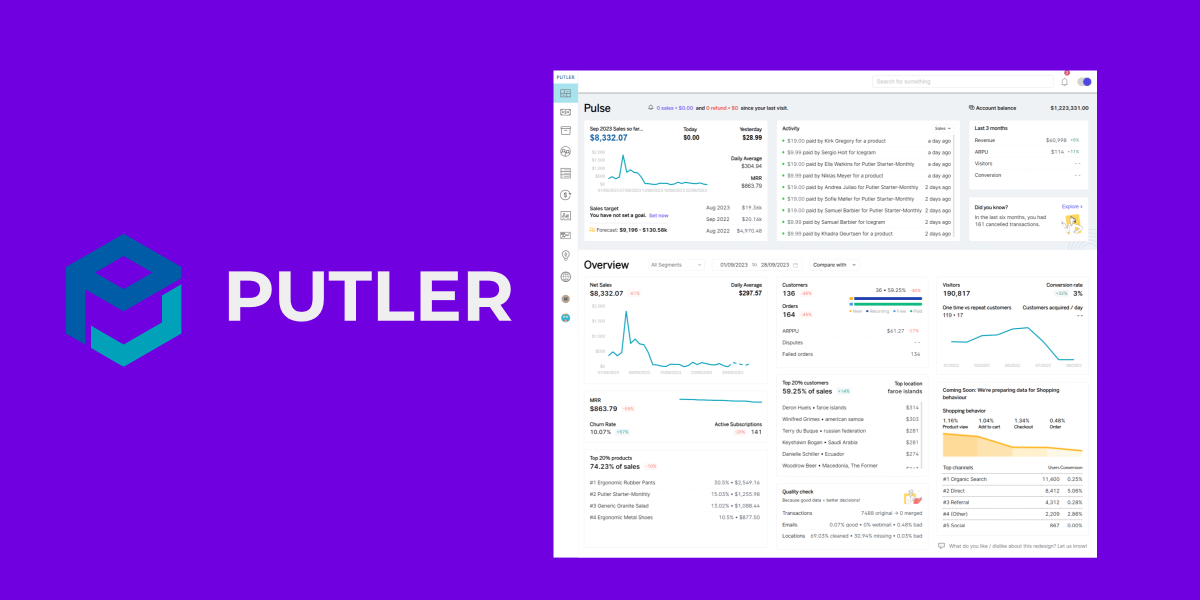
Data drives your decisions when you run an online business in 2025. Putler has served many eCommerce entrepreneurs well by pulling together sales from Stripe, PayPal, Shopify, and other platforms into one dashboard. But as your business scales, you might wonder if there's something better out there.
Putler's pricing structure might eat into your margins as you grow. You might want AI-powered insights that predict customer churn before it happens. You need deeper integration with tools Putler doesn't support.
The analytics space in 2025 offers more options than ever before. AI-driven platforms alert you to revenue anomalies in real-time. Specialized subscription analytics tools dig deeper into customer lifetime value. You have choices that didn't exist a few years ago.
This guide walks you through the most compelling Putler alternatives available right now. Not just a superficial list, but a practical breakdown of what each tool excels at, where it falls short, and which businesses benefit most from switching.
Think of Putler as a Swiss Army knife. One long-time customer described it as having "the depth of features" that others lacked, and another praised how it "consolidates data from 17+ integrations (PayPal, Stripe, WooCommerce, Shopify) into one digestible dashboard." That breadth works brilliantly when eCommerce analytics was about basic sales metrics. But 2025 is different.
The cracks start showing as businesses scale. One CEO noted frustratingly: "It misses some sales and I cannot figure out why - and I have not gotten a response from Support (3 weeks at this point)." Another user mentioned wanting "the MRR and Subscription stats refreshed faster, but I know they are working on this part." Multiple reviewers complained that "the data import was a bit slow" and some found it "sometimes a bit slow to sync and import data from other source."
Today's analytics environment demands three things Putler struggles to deliver well.
Predictive AI capabilities
Modern businesses need tools that forecast what's ahead, not just report what happened. While Putler has forecasting features, it lacks the explicit AI agents and automated alerts that competitors now offer as standard. The platform relies on traditional forecasting models rather than the predictive machine learning that's become table stakes in 2025.
Specialized depth
One review candidly admitted that "SaaS metrics - Since Putler integrates multiple gateways, the SaaS metrics are not their strongest feature." Putler aggregates data from approximately 17 different sources, which sounds impressive until you realize you get surface-level metrics across all of them. A marketing manager summed up a common frustration: "It needs a lot more integrations like Facebook Ads, Google Ads, Amazon, Shopee, Lazada, Etsy, Ebay and more."
Many businesses now prefer tools that go extraordinarily deep in one area—like subscription analytics or behavioral tracking—rather than shallow coverage everywhere. As one user explained when switching to Putler from ChartMogul: "When I added physical non SaaS products, reporting became a mess. I had no track of the sales and the numbers seemed really off." This works both ways. Businesses outgrow Putler when they need specialized capabilities it can't provide.
Transparent pricing at scale
Putler's pricing shifted "based on your monthly revenue so as to be fair to everyone," according to the company's own response to reviews. One user noted it's "a bit pricy but worth it as it does what it is meant for," while another simply called it "a bit pricey." This revenue-based tiering can create unpleasant surprises as you scale. Several alternatives offer more predictable structures.
The shift isn't just about features. One user described the pre-Putler reality well: "I was constantly switching between PayPal, Stripe, and Google Analytics, often getting conflicting numbers." The eCommerce space post-pandemic looks fundamentally different, with multichannel complexity at an all-time high and privacy regulations reshaping how we handle customer data. What worked in 2022 doesn't cut it in 2025.
Before we go deep into each platform, here's how the leading alternatives stack up.

If Putler is a dashboard that tells you what happened, GrowthOptix is more like having an analyst who warns you about what's about to happen.
This platform specializes in real-time revenue analytics for Stripe and PayPal, built specifically for SaaS, subscription-based, and eCommerce businesses. What sets it apart is AI-powered anomaly detection that continuously monitors your key metrics—revenue, MRR, churn, and conversion rates—and automatically flags unusual patterns before they become problems.
Where it shines: The onboarding process takes less than 5 minutes to create an account, and most users see actionable insights within 15-20 minutes of connecting their payment accounts. The platform automatically imports up to 5 years of historical data from Stripe and 3 years from PayPal, giving you immediate context for trend analysis.
GrowthOptix handles complex billing scenarios seamlessly. Prorated upgrades, usage-based billing, refunds, and annual or recurring subscriptions all appear automatically in real-time dashboards without any manual setup. Multi-currency support is built-in, with all transactions automatically converting to your payment provider's default currency for consistent reporting.
New capability rolling out: GrowthOptix is launching Marketing Attribution between December 7-10, 2025. This feature connects advertising platforms like Google Ads, Meta Ads, TikTok Ads, and Bing Ads to give you a complete view of revenue sources and ROI. This addresses one of Putler's key limitations by connecting marketing spend to actual revenue outcomes.
Where it falls short: The platform currently focuses exclusively on Stripe and PayPal. If you need consolidated data from Square, Braintree, Adyen, or other payment processors, you'll need to wait for future integrations. GrowthOptix doesn't currently provide public API access for custom integrations or data exports, though this is on the long-term roadmap.
Best fit: You run a SaaS or subscription eCommerce business processing transactions through Stripe or PayPal. You want AI that proactively surfaces insights rather than forcing you to hunt through reports. You value speed—getting from signup to actionable insights in under 20 minutes matters more to you than having every possible integration.
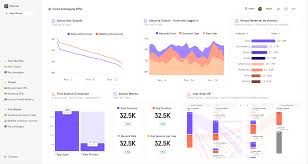
Mixpanel takes an event-based approach to analytics, tracking user behavior, A/B testing results, and offering predictive insights. Think of it less as a sales tracker and more as a customer psychology tool.
While Putler excels at answering "How much did we sell?", Mixpanel answers "Why did this customer segment convert while that one didn't?" It tracks every click, page view, and interaction to build detailed profiles of user journeys.
The advantage
With a 4.5 out of 5 rating for ease of use and 4.6 for features, Mixpanel has refined its interface over years of iteration. The free tier is genuinely useful for startups, and paid plans start at just $25 monthly, far more accessible than many alternatives.
For product-led growth companies, this depth is essential. You can segment users who completed specific event sequences, identify drop-off points in your funnel, and run sophisticated retention analyses that Putler can't match.
The tradeoff
The platform has a steeper learning curve for non-technical users. You're not just importing sales data. You define events, set up tracking, and build custom reports. Budget a week for your team to become proficient.
Best fit
You run a product-focused business where understanding user behavior drives growth more than tracking raw sales numbers.

Baremetrics focuses on subscription metrics, offering dunning automation, revenue forecasting, and integrations with Stripe and PayPal. Baremetrics has shifted to modular pricing, allowing you to pay for what you need.
If GrowthOptix is the new kid with AI tricks, Baremetrics is the established veteran that's owned subscription analytics. It scores 4.4 out of 5 for ease of use and 4.3 for features, reflecting a mature product that does one thing exceptionally well.
The power feature
Dunning management. When customer credit cards fail, Baremetrics automatically retries charges using intelligent timing algorithms and sends personalized recovery emails. This automated churn recovery tool has proven particularly valuable for businesses losing revenue to failed payments.
The metrics dashboard speaks subscription language fluently. MRR, ARR, LTV, churn rate, and expansion revenue all come standard. You're not adapting a general analytics tool. You use one purpose-built for recurring revenue.
The limitation
Baremetrics remains primarily subscription-oriented. If you run a hybrid model with both subscription boxes and one-time product sales, you get comprehensive insights on the former but basic tracking on the latter.
Best fit
Your revenue model is primarily subscription-based, and you want specialized tools for churn reduction and customer lifetime value optimization.
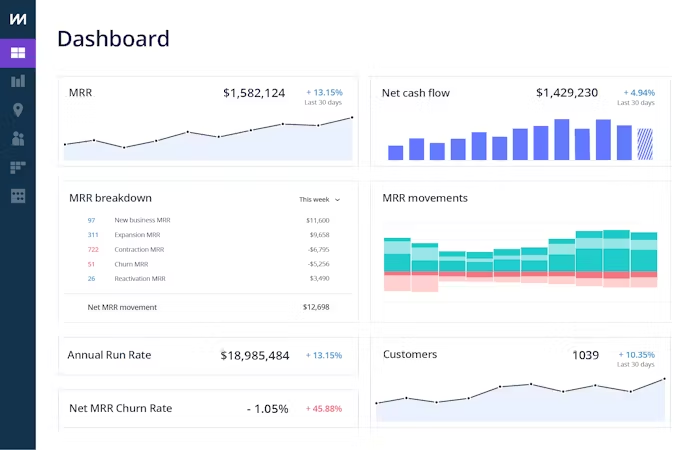
ChartMogul handles MRR and ARR tracking, cohort analysis, and custom reports, with integrations across major eCommerce platforms. It now starts at $100/mo for the Scale plan, based on ARR.
The platform excels where others stumble with complex billing scenarios. If your pricing has add-ons, usage-based components, annual contracts with monthly add-ons, and various discount structures, ChartMogul untangles that complexity into clean metrics.
Where it excels
The cohort analysis tools are particularly sophisticated. You can track how customer value changes over time based on acquisition source, plan type, or dozens of other dimensions. For B2B SaaS companies trying to understand which customer segments deliver the best long-term value, this visibility is essential.
The custom reporting capabilities mean you're not locked into preset dashboards. As your business model changes, your analytics can change with it.
The consideration
The higher starting price makes it one of the pricier options, though that's justified if you need the sophistication. For simpler pricing models, you might pay for capabilities you won't use.
Best fit
You run a B2B SaaS company with complex, multi-tiered pricing that needs accurate revenue recognition across various billing scenarios.
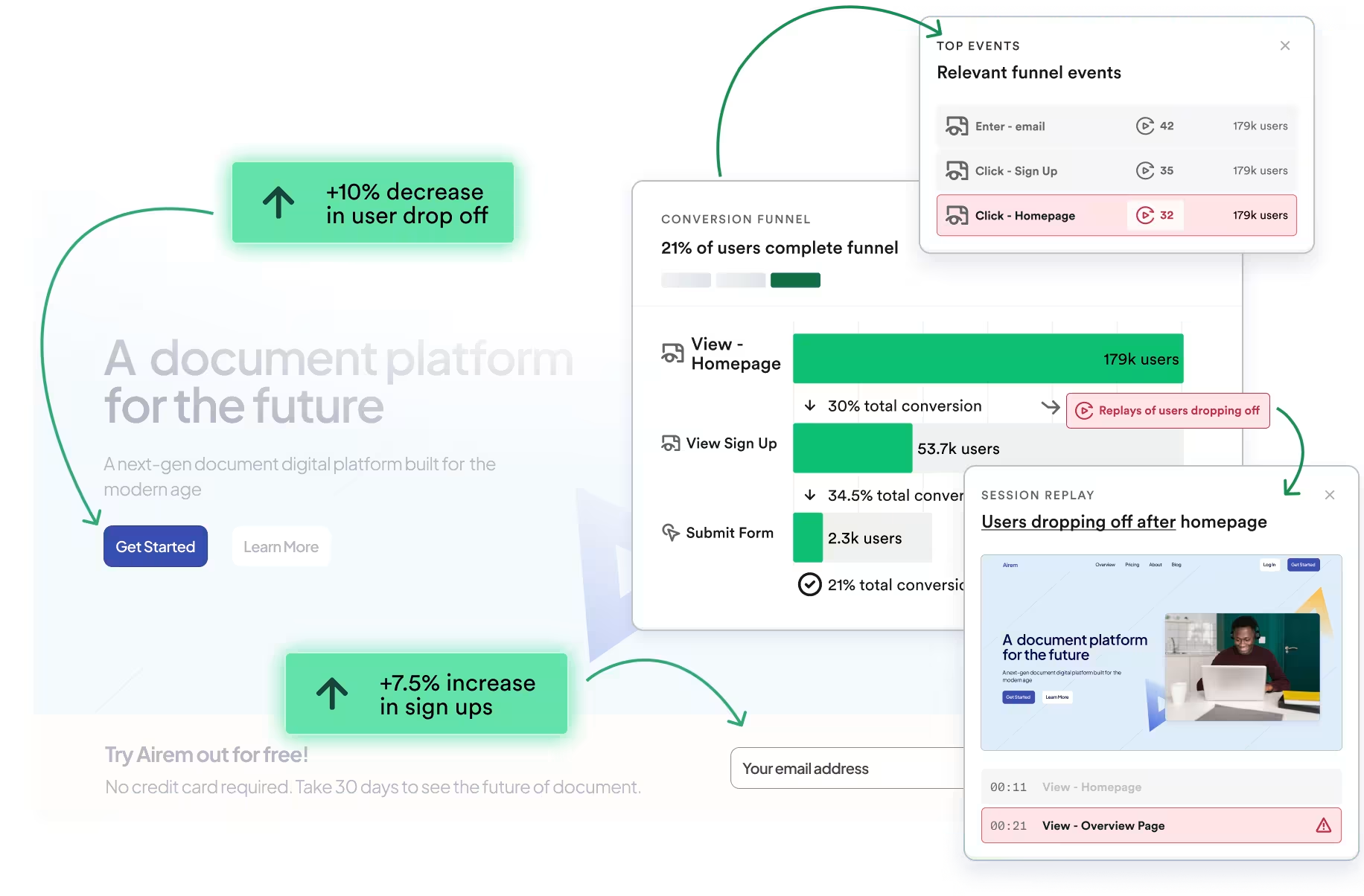
Heap offers automatic event capture, session replays, and funnel analysis with a no-code setup, featuring both a free tier and usage-based paid plans.
What makes Heap remarkable is that you don't define tracking events in advance. The platform automatically captures every interaction on your site or app, then lets you retroactively analyze behaviors you didn't think to track initially.
Say you find out that customers who interact with a specific feature have higher retention. You can analyze that pattern historically, even though you only thought to investigate it today. That's Heap's superpower.
The benefit
It scores 4.2 for ease of use and 4.3 for features, with the no-code setup standing out. Non-technical marketers can build sophisticated analyses without requesting developer support for every question.
Session replay functionality adds another dimension. You watch actual user sessions to understand friction points that pure analytics miss.
The challenge
The automatic capture can create data overwhelm. With thousands of events tracked automatically, finding signal in the noise requires thoughtful filtering and a clear analytics strategy.
Best fit
You run a product-led growth company that values behavioral insights and wants analytics that don't require extensive engineering resources.
.png)
Google Analytics 360 provides traffic source tracking, eCommerce features, AI insights, and custom dashboards, starting at approximately $50,000 annually.
The price tag tells you everything. This is for enterprises processing massive traffic volumes where the investment makes sense against revenue scale. It rates 4.2 for both ease of use and features, benefiting from Google's continuous refinement.
Best fit
You run an enterprise with millions of monthly visitors requiring unsampled data and dedicated support.
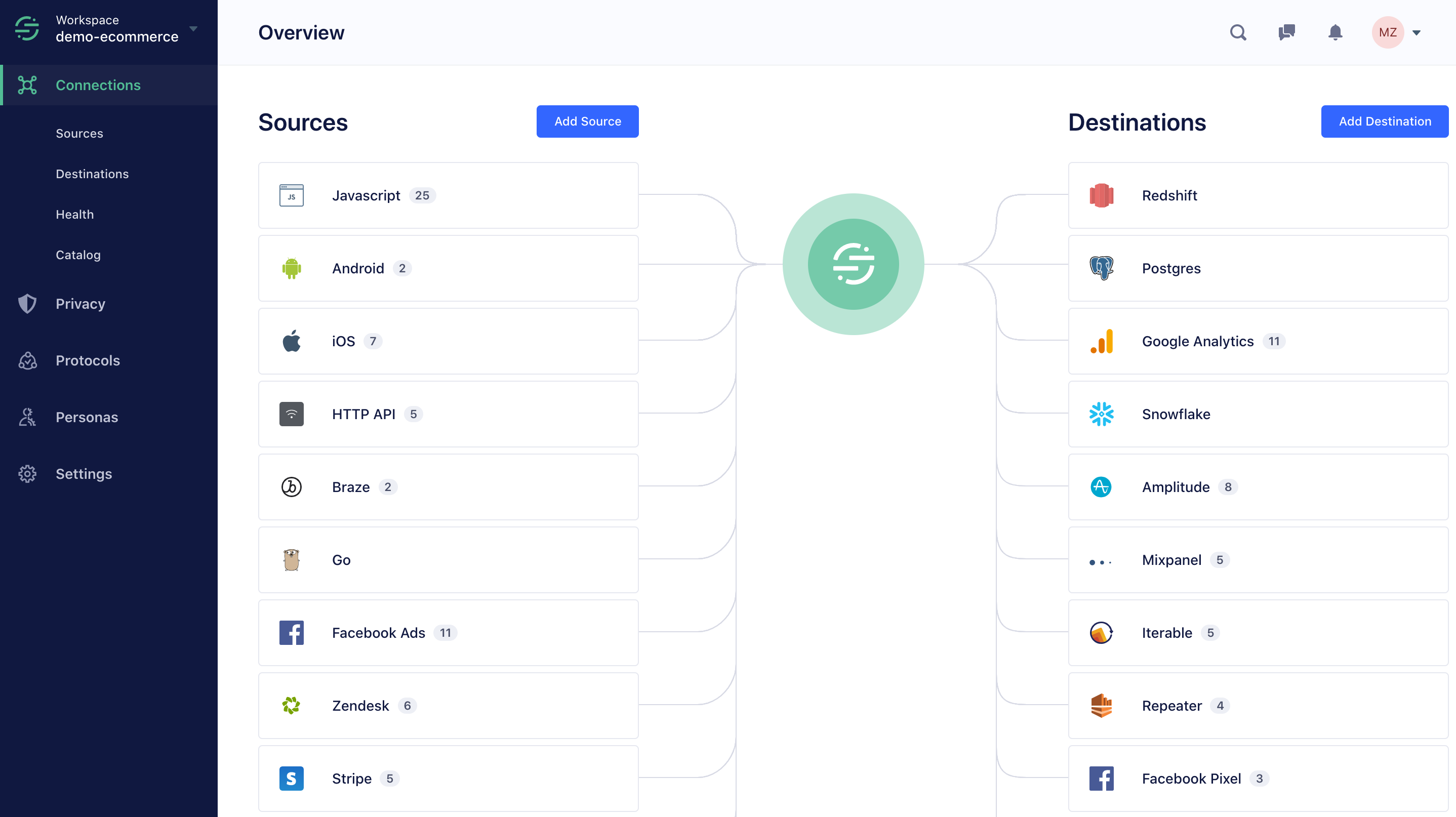
Twilio Segment functions as a customer data platform routing information across your tech stack, with pricing starting at $120 monthly.
Think of Segment less as an analytics tool and more as the infrastructure connecting all your tools. It collects data once and distributes it everywhere - your email platform, analytics tools, CRM, and advertising platforms.
With ratings of 4.4 for ease of use and 4.5 for features, it's well-regarded for solving the data integration headache.
Best fit
You manage multiple marketing and analytics tools that need consistent, unified customer data.
Fullstory specializes in digital experience analytics with heatmaps, frustration signals, and session replays, offered at custom pricing based on volume.
This platform shines light on the qualitative aspects of user experience - where people struggle, what causes friction, and how interface changes impact behavior. Scoring 4.3 for ease of use and 4.4 for features, it's mature and reliable.
Best fit
Your conversion optimization depends on understanding and improving user experience at a granular level.
Most comparison articles skip the warnings. Here's what commonly goes wrong.
GDPR compliance isn't automatic. Verify that alternatives provide EU server options. Always verify SOC 2 certification before migrating customer data.
If you serve European customers, data residency requirements aren't optional. Fines for non-compliance have only increased in 2025.
While Putler handles 17 different data sources, make sure your chosen alternative matches your specific integration needs.
People fall in love with a platform's headline features without auditing their actual integration requirements first. GrowthOptix's payment-focused approach works brilliantly if that's your primary need, but fails if you require broader platform coverage.
Create an integration checklist before evaluating alternatives. Which platforms do you currently use? Which matter most for your analytics? Where are your blind spots?
Metered pricing models can surprise you during growth phases. Compare usage-based pricing structures carefully.
People skip trial periods without testing with real data volumes. What seems affordable at 1,000 events monthly might become prohibitive at 100,000. Run your actual volumes through pricing calculators before committing.
Historical data often doesn't transfer completely between platforms. People rush the switch without proper backup procedures.
Year-over-year comparisons become impossible if you lose historical context. Plan for at least partial historical data loss and maintain Putler read-only access for the first quarter after switching if possible.
AI-powered tools like Mixpanel can overwhelm teams unfamiliar with advanced analytics.
People ignore the training investment required. Start with core metrics rather than attempting to use every feature right away. The most sophisticated platform becomes useless if your team can't operate it effectively.
In 2025, avoid over-reliance on any single vendor, particularly US-based tech platforms. Choose platforms with robust export capabilities and open APIs.
Consider European alternatives for stability and regulatory alignment if data sovereignty concerns apply to your business.
Rather than chasing the "best" tool universally, match solutions to your specific situation.
For early-stage SaaS (under $50K MRR), start with free tiers from Mixpanel or GrowthOptix. You need behavioral insights more than sophisticated revenue analytics at this stage. Upgrade as you scale.
For subscription businesses ($50K-$500K MRR), GrowthOptix or Baremetrics offer the right balance of automation and specialization. The AI alerts from GrowthOptix become valuable as customer volume makes manual monitoring impossible.
For B2B SaaS with complex billing ($500K+ MRR), ChartMogul justifies its premium pricing when accurate revenue recognition across complicated contracts becomes critical. The cohort analysis pays for itself in better customer acquisition decisions.
For product-led growth companies, Mixpanel or Heap provide the behavioral depth you need. Session replays and event tracking trump pure revenue metrics when product experience drives growth.
For enterprise operations, Google Analytics 360 or Segment make sense at scale. The infrastructure investment becomes negligible against revenue volume.
Choosing a Putler alternative isn't about finding the objectively "best" platform. The goal is to identify which tool aligns with your business model, technical capabilities, and growth stage.
Start with free trials. Most platforms mentioned here offer 14-30 day evaluation periods. Run them in parallel with Putler to directly compare insights and usability with your actual data.
Focus less on feature lists and more on three questions: Does this platform answer the specific questions that drive my business decisions? Can my team actually use this effectively without constant frustration? Will the pricing model remain sustainable as we scale?
Join hundreds of SaaS companies who finally understand which marketing drives profitable growth.